

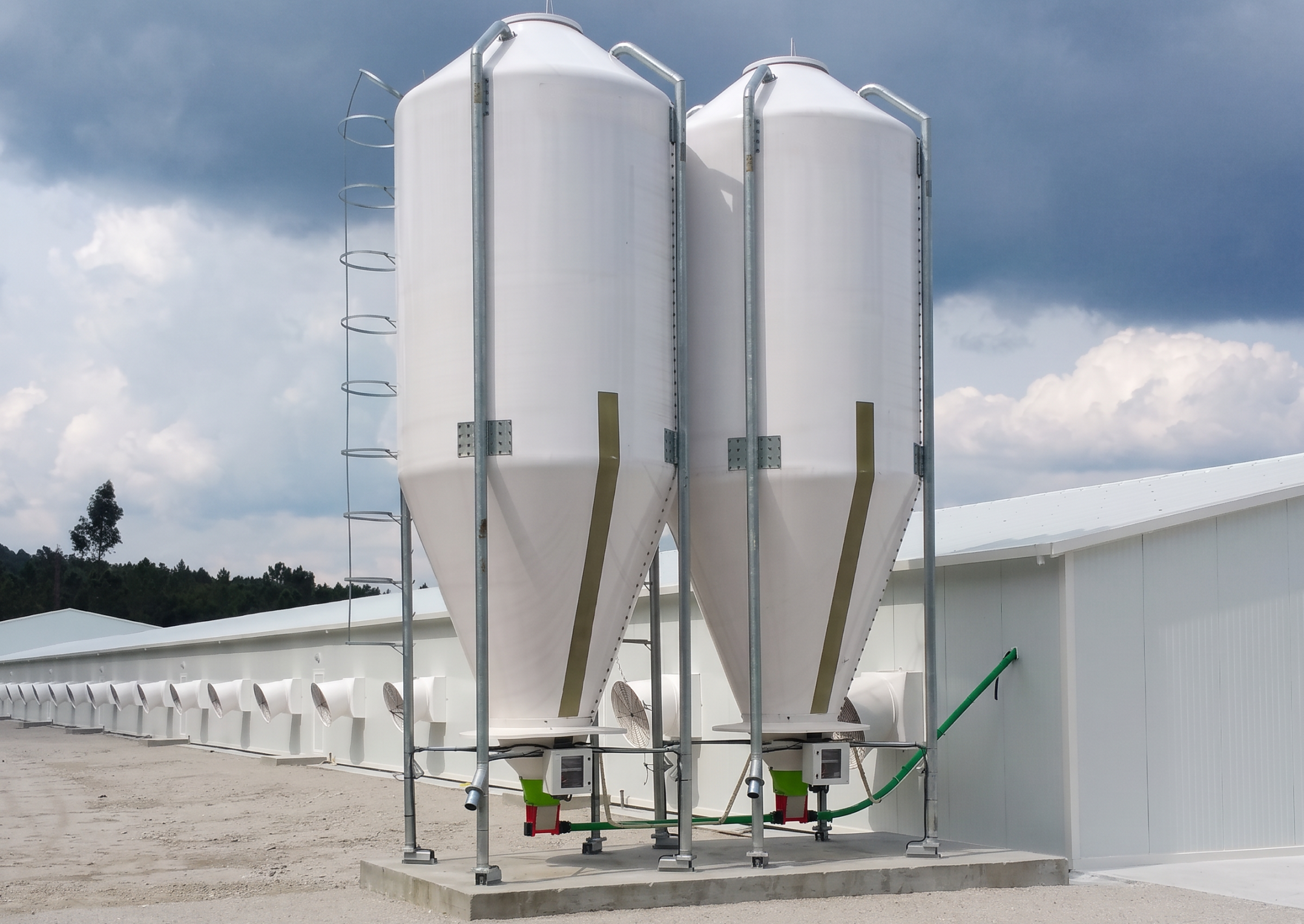
On many farms, the amount of feed available in the silos is still estimated by eye, by tapping the metal sheet or climbing the ladder to the top. The method seems adequate until the day an order arrives late – or too early – and the cumulative cost of that estimation becomes apparent all at once.
Visual estimation holds up because, when assessed on a day-to-day basis, the margin of error is small. Feed comes in and goes out at a rate that the farm manager knows well, and experience makes up for any shortfall. For years, this balance has worked, and it is only natural that it should continue to seem the most practical way of managing supplies.
What makes the difference is scale. With more sheds, smaller batches and feed accounting for the largest share of production costs, every deviation carries greater weight. The accumulation of small errors begins to have a direct impact on the profitability of each batch.
The cost of the estimate is reflected in the transport and the quality of the feed
When the silo empties faster than expected, the order becomes urgent. Transport costs rise, the feed mill fits the delivery in wherever it can, and in the most pressing cases, the animals may even be left with empty feeders for a few hours, which has an immediate effect on their growth.
The opposite mistake is less obvious but just as costly. Feed ordered too early builds up in the silo, where it is subject to temperature fluctuations and condensation on the metal walls. Over time, it absorbs moisture and forms clumps that make unloading difficult, as well as becoming susceptible to mould. This necessitates more frequent cleaning and, at times, the disposal of part of the load.
Added to this is the human factor. Climbing to the top of the silo to check the level is a risky task, often carried out in windy or rainy conditions and repeated every week. It involves labour time and exposure to accidents that are not factored into the farm’s accounts.
The consumption curve is the first sign that something has changed in the hall
With the continuous heavy-duty silo, stock levels are now an exact figure at any given time. The greatest benefit, however, lies in consumption. Each discharge to the feed line is recorded as a weight variation, and the combination of these variations plots the feed curve for each shed throughout the day and across the batch.
This curve tracks the animals’ age and growth with great regularity, which is why any deviation is significant. A drop in feed intake may be the first sign of heat stress, a failure in the water supply or a health problem in its early stages. Often, the silo records show the change before it becomes apparent in the animals’ behaviour.
An unexpected increase also warrants attention. It may indicate wastage on the line, poorly adjusted feeders or a leak in the feed conveyance system. In any case, the issue is detected on the same day, and corrective action is taken whilst the impact is still minimal.
Weighing accuracy depends more on the installation than on the sensor
The principle is simple. Load cells fitted to the silo’s supports measure the force exerted by the assembly, and the system converts this reading into kilograms of feed, deducting the weight of the empty structure. The quality of the measurement, however, depends on the details of the installation.
To ensure reliable readings, all the silo supports must rest on load cells, so that the load is distributed evenly. Rigid connections to the silo, such as pipework or the feed conveyor, divert part of the weight and should be replaced with flexible ones. Wind and the temperature difference between day and night also affect the reading, so a good system filters out sudden variations and compensates for these effects.
The installation often raises a practical question: will the silos need to be replaced? In most cases, the sensors are fitted to the existing silos whilst the silo is empty, and the work takes very little time. Final calibration can be carried out using the first delivery of feed, the weight of which is indicated on the consignment note. For those who prefer to proceed in stages, starting with a single silo allows the measurement and return to be validated before extending the system to the entire farm.
Weighing is more efficient when it shares the panel with the environmental control system
A single weight reading answers one question: how much feed is left. When linked to the system that manages ventilation, temperature and humidity, it answers another, far more useful question: why consumption has changed. If the drop coincides with a temperature spike, the cause is clearly shown on the same screen and corrective action begins on the very same day.
Integration also simplifies day-to-day operations. Low-stock alerts are received via the same channel as the other alarms in the pavilion, and the threshold can be set in terms of days’ supply, calculated based on the actual consumption rate of each batch. Orders are now placed with the feed mill at just the right time, and the management of multiple barns is centralised in a single point of contact.
With feed and heavy poultry, the feed conversion ratio is now measured for each batch
The feed conversion ratio – the ratio of feed consumed to weight gained by the animals – is the indicator that best summarises the efficiency of a batch. On many farms, it is only calculated at the end, based on feed invoices and the weight at dispatch, by which time it is too late to rectify what went wrong.
With the weighing of the silos and the use of poultry scales in the house, both sides of the equation are now measured every day. The index is monitored throughout the batch, and every decision regarding ventilation, temperature or lighting programme can be assessed in terms of its effect on feed conversion. Comparisons between flocks are based on concrete data, and best practices from one house are more easily adopted in the others.
Tecsisel has been developing control systems for poultry and pig farming since 2001, with processes certified to the ISO 9001 standard, and integrates feed and animal measurement into the same system that manages the house environment. For farms wishing to switch from estimation to measurement, the technical team assesses the silos and equipment already in place and proposes an integration plan, including stock alerts, consumption history and a feed conversion ratio monitored batch by batch.